Custom packaging materials, compared honestly.
Board choice decides how a box protects, prints, feels and how much it costs. Here’s what each material is, where it shines and where it doesn’t.
- Exact board grades on every quote
- Food-contact and recycled options
- Sample kit to feel them in hand
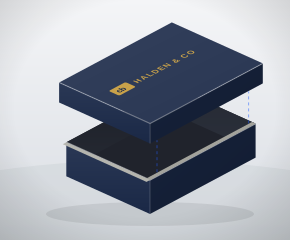
All materials.
Cardboard / SBS boxes
Bright white paperboard for retail cartons.
See material →Corrugated boxes
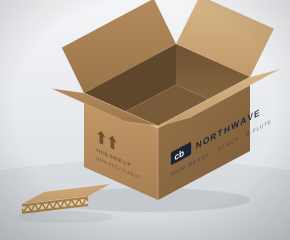
Fluted board for mailers and shipping.
See material →Kraft boxes
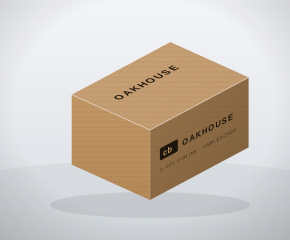
Unbleached brown board with a natural look.
See material →Rigid boxes
Wrapped grayboard for luxury and gifting.
See material →Eco-friendly boxes
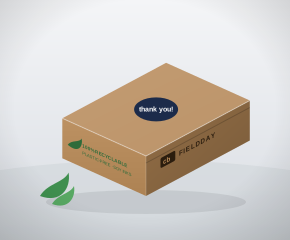
Recycled, recyclable and plastic-free options.
See material →Holographic & metallic boxes
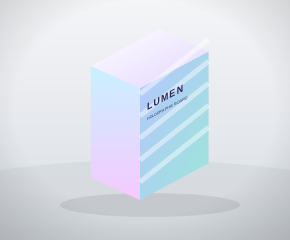
Iridescent and metallized boards.
See material →Textured & linen boxes
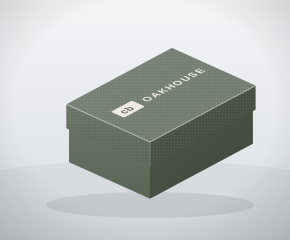
Embossed papers and fabric-like wraps.
See material →Black boxes
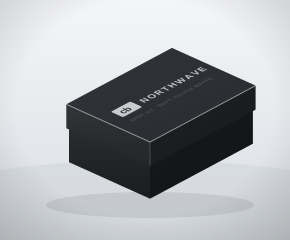
Black board and soft-touch black finishes.
See material →Material comparison.
| Material | Thickness | Protection | Print quality | Typical use | Relative cost |
|---|---|---|---|---|---|
| SBS paperboard | 14–28pt | Light | Excellent | Retail cartons, cosmetics | $ |
| Kraft paperboard | 14–24pt | Light | Good (warmer colors) | Natural brands, food | $ |
| E-flute corrugated | ~1/16 in | Medium | Very good | Mailers, subscription boxes | $$ |
| B-flute corrugated | ~1/8 in | High | Good | Heavier mailers, shippers | $$ |
| Rigid grayboard | 1.5–3 mm | High | Excellent (printed wrap) | Gifts, luxury, jewelry | $$$$ |
| Specialty boards (holographic, metallic, linen) | varies | Light–high | Distinctive | Statement packaging | $$–$$$ |
Units you’ll see on quotes
- Points (pt) for paperboard: 1 pt = 0.001 in, so 18pt is 0.018 in thick.
- GSM (grams per square meter) for paper and grayboard weight: rigid boxes typically use 1000–2000gsm board.
- Flute and ECT for corrugated: the flute size (E, B, C…) and the edge crush rating — see corrugated boxes.
Choosing by what matters most to you.
- Lowest cost per unit: SBS or kraft folding cartons.
- Ships safely on its own: corrugated mailers and shipping boxes.
- Premium and kept: rigid boxes, especially with textured or black wraps.
- Most sustainable: recycled kraft or corrugated, no plastic lamination, minimal ink — see eco-friendly boxes.
- Most eye-catching: holographic and metallic boards, used sparingly.
The best way to decide is to handle the boards. Our sample kit includes the main materials and finishes.
How board choice affects your total cost.
Material isn’t just the board price. It changes freight (rigid boxes ship assembled and take far more space), storage (folding cartons and mailers ship flat), packing labor (pre-assembled rigid vs folding on site) and damage rates (an under-specified board costs more in replacements than it saved). When comparing quotes, compare the landed cost per packed unit, not just the box price.
Matching material to product weight.
| Product weight | Typical starting material |
|---|---|
| Under 8 oz, sold on shelf | 16–18pt SBS or kraft carton |
| 8 oz – 2 lb, sold on shelf | 20–24pt SBS or F/E-flute |
| Under 3 lb, shipped direct | E-flute mailer |
| 3–10 lb, shipped direct | B-flute mailer or 32 ECT shipper |
| 10–40 lb | 32–44 ECT single wall shipper |
| Over 40 lb or fragile | Double wall (48 ECT+) |
| Any weight, premium gift | Rigid grayboard (1.5–3 mm) |
These are starting points; fragile, irregular or liquid products may need more.
Material questions to ask before you order.
- Will the product touch the board directly? If it’s food, you need food-contact board.
- Does the box need to survive a parcel network on its own, or travel inside a shipper?
- Is the inside visible when the box is opened? SBS is white throughout; recycled board has a gray back.
- Do you plan to print sustainability claims? Choose a board and finish you can substantiate.
Not sure which board?
Tell us the product, its weight and how it ships. We’ll recommend a board and explain why.