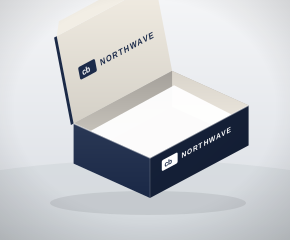
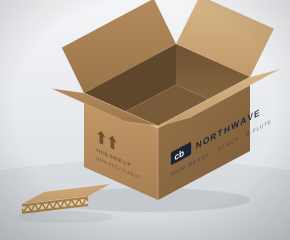
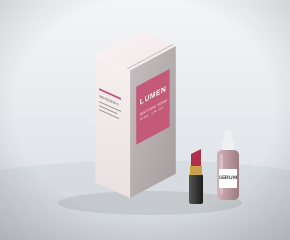
Custom packaging designed around the product — not the other way round.
Primary cartons, shipping mailers, rigid gift boxes, inserts and sleeves, all built to your dimensions and brand standards and quoted on a single order.
- Boxes, inserts and sleeves on one quote
- Structural design included
- Ship to one address or several
- Box styles
- 12+
- Board families
- 8
- Dieline & proof
- Free
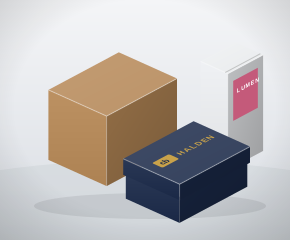
Primary, secondary and shipping packaging — what each one does.
Packaging works in layers. Getting each layer right is how brands cut damage, freight cost and wasted material at the same time.
- Primary packaging touches the product: the bottle, jar, pouch or tube. We don’t make bottles, but we design the boxes and inserts that hold them.
- Secondary packaging is what the customer sees on the shelf or opens at home — a tuck end carton, a rigid box, a sleeve. It carries the brand, the legal copy and the story.
- Shipping (tertiary) packaging survives the journey: mailer boxes for direct-to-consumer orders and corrugated shipping boxes for wholesale cartons and heavy goods.
For e-commerce brands the secondary and shipping layer are often the same box — a printed mailer that has to look good and survive a parcel network. That changes the material choice: E-flute corrugated rather than paperboard.
Start from the product
Before choosing a style, measure the product (or the product in its primary container) and note its weight and how fragile it is. Then decide how it reaches the customer — shelf, parcel, or both. Those three facts narrow the options more than any style catalog.
From product to packaging in five decisions.
Fit
Measure length × width × depth of the product, then add the insert or padding allowance.
Journey
Shelf, parcel, freight or hand-delivered — this sets the board strength.
Structure
Mailer, tuck end, rigid, sleeve or display, chosen for how the box opens.
Decoration
Print colors, inside print and one or two finishes that suit the brand.
Explore by box style or material.
Custom inserts: the part of the box customers remember.
An insert holds the product in place, protects it in transit and controls the order things are revealed when the box opens. It’s also where most fit problems hide.
- Die-cut card inserts are the most economical and recyclable; good for cartons, candles and cosmetic sets.
- Corrugated inserts add crush resistance for glass and heavier products in mailers.
- Foam inserts (EVA or PE) give a precise cradle for electronics, tools and premium gift sets.
- Molded pulp suits brands that want plastic-free protection for bottles and jars.
We draw the insert and the box together, so the cut-outs match the outer dimensions. Tell us how many items go in and whether they’re glass.
Frequently asked questions
What is the difference between custom packaging and custom boxes?
Custom boxes are one part of custom packaging. Packaging also covers inserts, sleeves, labels and the shipping layer — we quote all of the paper-based parts together so they fit each other.
Can you design packaging for a product that is not finished yet?
Yes, if you can give us the final dimensions of the product or its container. Send a sample or a technical drawing as soon as you have one, and we will confirm the fit before production.
Do you make bottles, jars or pouches?
No — we make the paper-based boxes, sleeves and inserts around them. If you already have your primary containers, send one so we can size the box precisely.
Can different packaging items ship to different addresses?
Yes. Retail cartons can go to your fulfilment center and gift boxes to your studio, for example, on the same order.
What do I need to send for a quote?
The inside dimensions of the box (or the product size), the quantity, and the style you have in mind. Artwork is optional at the quote stage — a logo and brand colors are enough for us to price printing accurately.
Plan your packaging with a specialist.
Book a free 15-minute consultation or send your product specs. We’ll recommend a structure, a board and a budget-friendly finish.